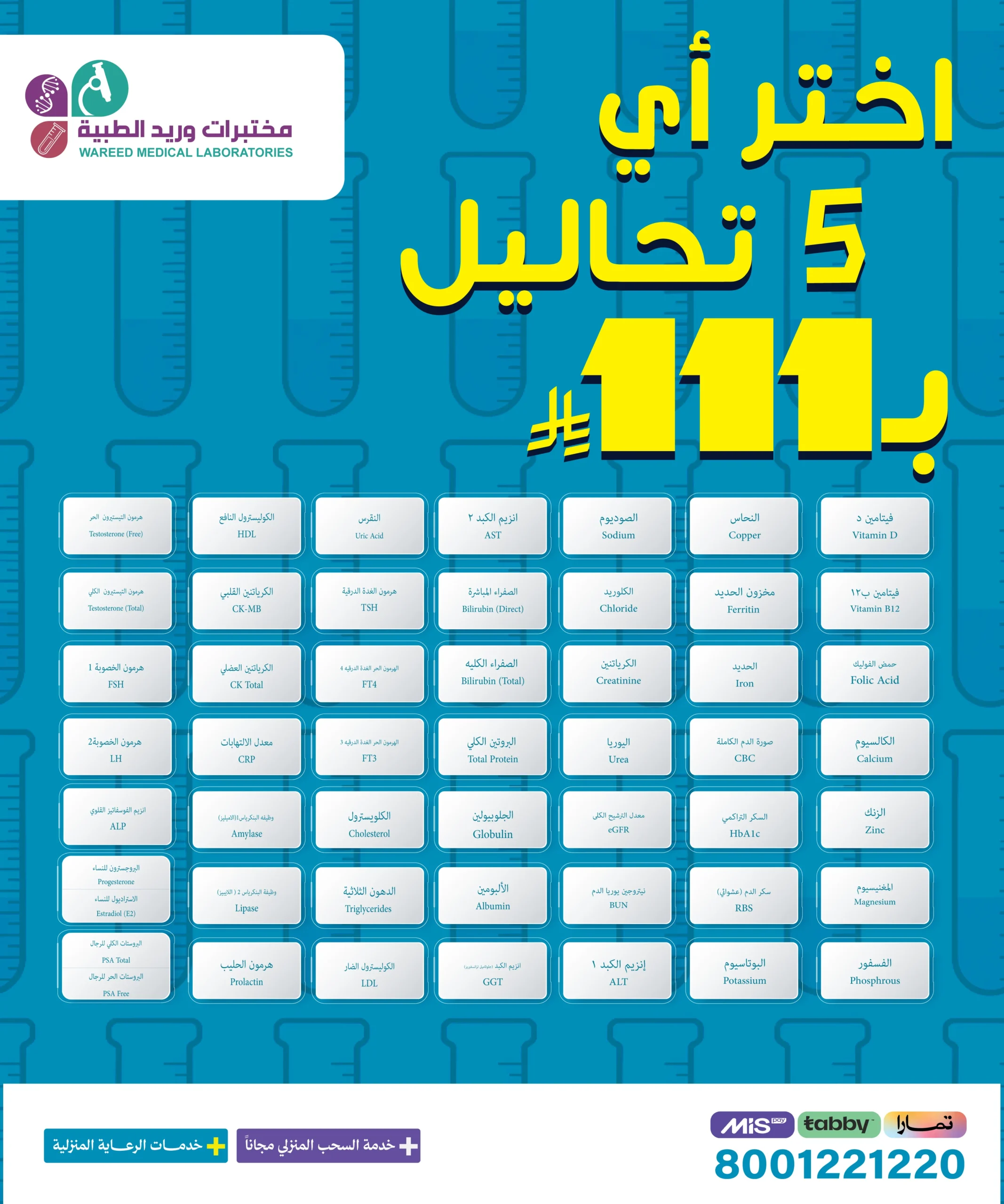
Choose any 5 laboratory tests from a wide range of options covering vitamins, liver and kidney function, diabetes, cholesterol and lipids, thyroid function, minerals, heart health, and pancreatic health.
Measures the level of vitamin D in the blood. Vitamin D is essential for calcium absorption and maintaining healthy bones and teeth. It also contributes to muscle function and supports the immune system.
Measures the level of vitamin B12, which is essential for red blood cell production, maintaining nerve health, and supporting energy metabolism.
Measures the level of vitamin B9, which is essential for blood cell production, cell division, and DNA synthesis. It is particularly important during pregnancy.
Measures the level of calcium in the blood. Calcium is essential for healthy bones and teeth and contributes to muscle function, nerve signaling, and blood clotting.
Evaluates red blood cells, white blood cells, and platelets. It helps detect anemia, certain infections, and blood disorders.
Measures the level of iron in the blood. Iron is essential for hemoglobin production and transporting oxygen to different tissues throughout the body.
Measures the unsaturated iron-binding capacity, which refers to the amount of transferrin available to bind iron. It helps assess the body’s iron status.
Measures the total capacity of the blood to bind iron. It is used alongside other iron tests to help assess iron deficiency and disorders of iron metabolism.
Measures the level of zinc in the blood. Zinc is an important mineral for immune function, wound healing, growth, and the activity of many enzymes.
Measures the level of copper in the blood. Copper is essential for blood cell formation, nervous system function, iron metabolism, and many other vital processes.
Measures the level of magnesium in the blood. Magnesium is essential for muscle and nerve function, helps maintain a regular heartbeat, and supports many vital processes.
Measures the level of phosphorus in the blood. Phosphorus is important for healthy bones and teeth, energy production, and normal cell function.
Measures the level of amylase, an enzyme that helps digest carbohydrates. It is used as part of the evaluation of certain pancreatic disorders.
Measures the level of lipase, an enzyme that helps digest fats. It is particularly useful in evaluating certain pancreatic disorders.
Measures a specific fraction of the creatine kinase enzyme. It may be used as part of the evaluation of heart muscle injury and is interpreted alongside symptoms, ECG findings, and other tests.
Measures the level of creatine kinase, an enzyme found mainly in muscles. Its levels may increase following muscle injury or excessive muscle exertion.
Measures the level of thyroid-stimulating hormone. It is one of the most important initial tests for evaluating thyroid function and detecting hypothyroidism or hyperthyroidism.
Measures the unbound portion of the T3 thyroid hormone available for use by the body. It helps assess thyroid activity, particularly when hyperthyroidism is suspected.
Measures the free (unbound) portion of the T4 thyroid hormone. Along with TSH, it helps evaluate thyroid function and identify thyroid disorders.
Measures the total amount of protein in the blood, mainly albumin and globulin. It helps assess certain liver and kidney conditions, as well as nutritional status.
Measures an enzyme found mainly in liver cells. Its levels may increase when liver cells are inflamed or damaged.
Measures an enzyme found in the liver, muscles, and other tissues. Along with ALT and other tests, it helps assess liver health.
Compares the levels of AST and ALT enzymes, helping the doctor interpret patterns of elevated liver enzymes within the clinical context.
Measures an enzyme associated with the liver and bile ducts. It helps assess certain liver and bile duct disorders and is interpreted alongside other liver function tests.
Creatinine
Urea
Estimated Glomerular Filtration Rate (eGFR)
Blood Urea Nitrogen (BUN)
Measures the level of triglycerides in the blood. These are a type of fat that the body uses to store energy. Elevated levels may be associated with an increased risk of cardiovascular disease.
Measures the level of high-density lipoprotein, which helps transport cholesterol from the tissues and bloodstream to the liver for processing and removal.
Measures the level of low-density lipoprotein. Elevated levels are a risk factor for cholesterol buildup in artery walls and cardiovascular disease.
Measures the total level of bilirubin in the blood. It helps assess certain liver and bile duct disorders, as well as the breakdown of red blood cells.
Measures the direct (conjugated) portion of bilirubin. It helps assess certain liver and bile duct disorders and the flow of bile.
Measures the level of albumin, the most abundant protein in the blood. It helps maintain fluid balance and transport various substances throughout the body.
Globulin
Insulin Level
Glycated Hemoglobin (HbA1c)
Random Blood Sugar (RBS)
Uric Acid
Ferritin
Potassium
Sodium
Chloride
Measures the level of chloride in the blood. Chloride is an important electrolyte that helps maintain fluid and electrolyte balance and the body’s acid-base balance.
سيتم التواصل معك من قبل وريد لتاكيد الحجز
سيتم التبرع بجزء من قيمة الفاتورة عبر منصة إحسان قدامك العافية