Saudi National Day Offer

26 test by 96 SAR

Get 26 tests for only 96 SAR, then add any additional test from the selected tests for just 13 SAR per test.
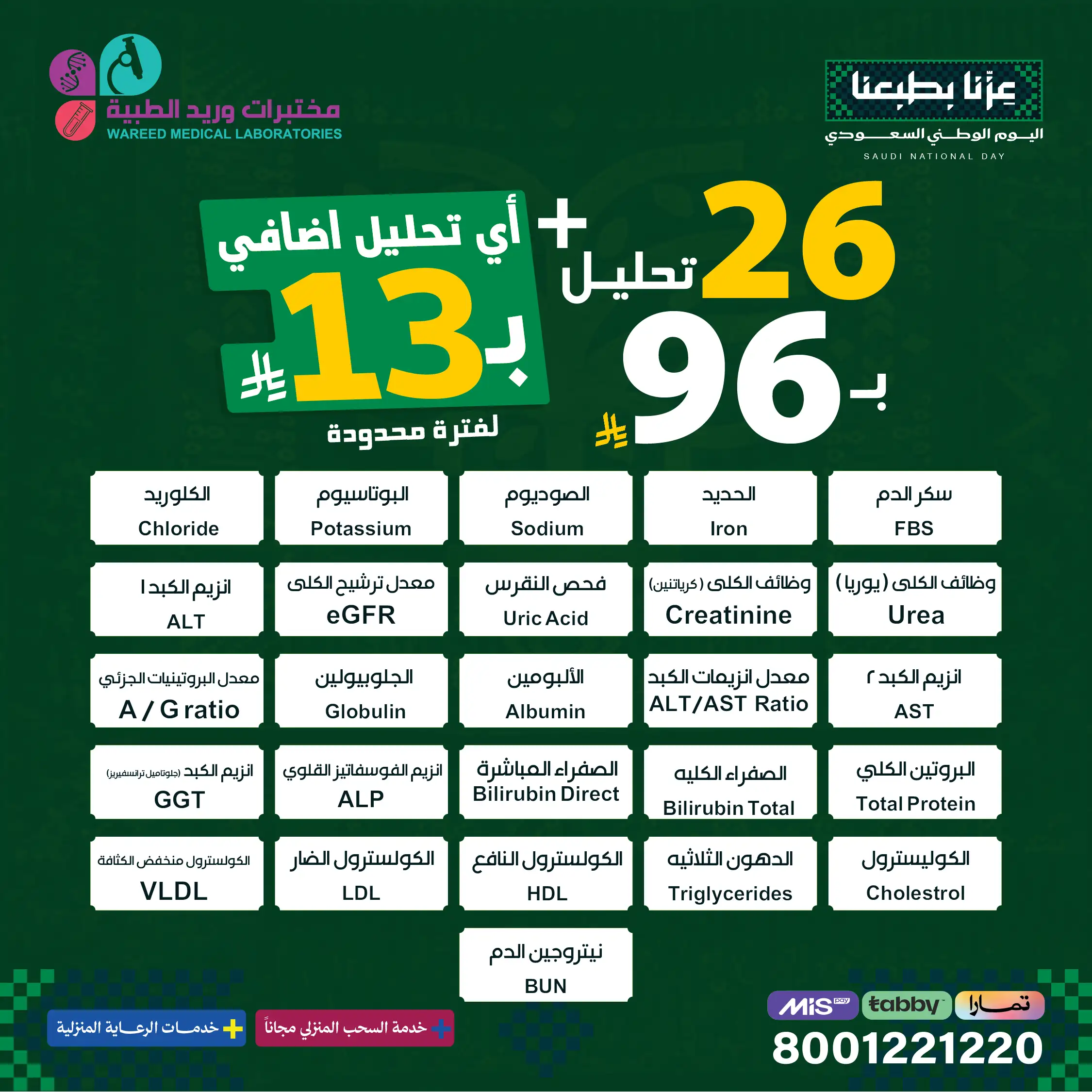
The 26 tests included in the National Day Offer

Fasting Blood Sugar – FBS
Measures blood glucose levels after fasting and helps assess blood sugar levels and identify blood sugar disorders.

Iron
Measures the level of iron in the blood. Iron is essential for hemoglobin production and oxygen transport to body tissues.

Sodium
Measures the level of sodium in the blood. Sodium is important for maintaining fluid balance and supporting nerve and muscle function.

Potassium
Measures potassium levels in the blood. Potassium is essential for proper muscle and nerve function and maintaining a regular heartbeat.

Chloride
Helps assess fluid and electrolyte balance as well as the body’s acid-base balance.

Urea
Measures the level of urea in the blood and helps assess kidney function and the kidneys’ ability to eliminate certain waste products resulting from metabolism.

Creatinine
One of the key markers used to assess kidney function. It can be evaluated along with the estimated glomerular filtration rate (eGFR) to assess kidney filtration efficiency.

Uric Acid
Measures the level of uric acid in the blood and helps assess conditions associated with elevated uric acid levels, such as gout, with the result interpreted according to the individual’s health status.

Estimated Glomerular Filtration Rate – eGFR
Provides an estimate of how effectively the kidneys filter blood. It is calculated based on several factors, including the blood creatinine level.

Liver Enzyme ALT (Alanine Aminotransferase)
An enzyme found mainly in the liver. Elevated levels may help indicate liver cell injury or inflammation.

Liver Enzyme AST (Aspartate Aminotransferase)
An enzyme found in the liver and other organs. It is used along with other tests to help assess liver function and identify certain conditions involving cell damage.

ALT/AST Ratio
Comparing ALT and AST levels can help provide a clearer picture when evaluating certain liver disorders. The ratio should not be interpreted on its own and should be considered alongside other test results.

GGT (Gamma-Glutamyl Transferase)
An enzyme primarily associated with the liver and bile ducts. It can help assess certain disorders affecting the liver and bile ducts.

Alkaline Phosphatase – ALP
An enzyme associated with the liver, bile ducts, and bones. It is used as part of a group of tests to assess liver function and certain bone disorders.

Total Protein
Measures the total amount of the main proteins in the blood and helps assess nutritional status and certain aspects of liver and kidney function.

Albumin
A major protein produced by the liver. It plays an important role in maintaining fluid balance and transporting various substances in the blood.

Globulin
A group of proteins found in the blood, including proteins that play important roles in immune function and the transport of various substances.

Albumin-to-Globulin Ratio – A/G Ratio
Compares albumin and globulin levels and may help assess certain conditions related to the liver, kidneys, nutrition, and immune system.

Total Bilirubin
Measures the total level of bilirubin in the blood. Bilirubin is produced when red blood cells break down and is processed and eliminated by the liver.

Direct Bilirubin
Measures the conjugated portion of bilirubin and, together with other bilirubin and liver function tests, helps assess certain disorders of the liver and bile ducts.

Indirect Bilirubin
Represents the unconjugated portion of bilirubin and helps assess the possible causes of elevated bilirubin levels when interpreted alongside other test results.

Total Cholesterol
Measures the total level of cholesterol in the blood. It is an important indicator when assessing cardiovascular health alongside other lipid profile results and risk factors.

HDL Cholesterol
Known as high-density lipoprotein cholesterol, HDL helps transport cholesterol from the bloodstream to the liver, where it can be processed and eliminated.

LDL Cholesterol
Known as low-density lipoprotein cholesterol. Elevated LDL levels may be associated with an increased risk of fatty plaque buildup in the arteries and cardiovascular disease.

Triglycerides
Measure a type of fat found in the blood. The test is used as part of an overall assessment of blood lipid levels and cardiovascular disease risk.

26. Very-Low-Density Lipoprotein Cholesterol – VLDL
Primarily associated with the transport of triglycerides in the blood. It is used as part of a lipid profile assessment alongside cholesterol and triglyceride levels.

Additional Tests for SAR 13 per Test After Purchasing the Offer

If you purchase the Saudi National Day Offer, which includes 26 tests for only SAR 96, you can choose any additional test from the following list for just SAR 13 per test:

Vitamin D
Measures the level of vitamin D in the blood. Vitamin D is important for healthy bones and teeth, helps the body absorb calcium, and plays a role in muscle and immune function.

Vitamin B12
Measures the level of vitamin B12 in the blood. Vitamin B12 is essential for red blood cell formation, supports nervous system health, and contributes to energy production in the body.

Folic Acid
Measures the level of folic acid (vitamin B9) in the blood. It is important for blood cell formation, cell division, and DNA synthesis, and is especially important during periods of growth and pregnancy.

Calcium
Measures the level of calcium in the blood. Calcium is essential for healthy bones and teeth and contributes to normal muscle and nerve function and blood clotting.

Complete Blood Count – CBC
Provides an overall assessment of blood cells, including red blood cells, white blood cells, and platelets. It helps evaluate general health and may help identify conditions such as anemia, infections, and certain blood disorders.

Complete Blood Count – CBC
Evaluates red blood cells, white blood cells, and platelets, and helps detect conditions such as anemia, certain infections, and blood disorders.

Unsaturated Iron-Binding Capacity – UIBC
Measures the amount of additional iron that blood proteins can bind. It is used along with other iron tests to help assess the body’s iron status.

Total Iron-Binding Capacity – TIBC
Measures the total capacity of blood proteins to bind iron. It helps assess iron deficiency or excess when interpreted alongside other iron test results.

Zinc
Measures the level of zinc in the blood. Zinc is an important mineral for immune function, wound healing, growth, and cell division, and is involved in the activity of many enzymes.

Copper
Measures the level of copper in the blood. Copper is essential for iron metabolism, blood cell formation, nervous system function, and several other vital processes.

Magnesium
Measures the level of magnesium in the blood. Magnesium is important for muscle and nerve function, maintaining a regular heartbeat, and numerous essential biochemical reactions.

Phosphorus
Measures the level of phosphorus in the blood. Phosphorus is an essential mineral that plays an important role in bone and teeth health, energy production, and normal cell and muscle function.

Phosphorus
Measures the level of phosphorus in the blood. Phosphorus is important for bone and teeth health, energy production, cell function, and many essential processes in the body.

Amylase
Measures the level of the enzyme amylase, which helps digest carbohydrates. It can be used as part of the assessment of certain conditions affecting the pancreas.

Lipase
Measures the level of the enzyme lipase, which primarily helps digest fats. It is used as part of the assessment of certain pancreatic disorders.

CK-MB

Creatine Kinase-MB – CK-MB
Measures a fraction of the creatine kinase enzyme that is more closely associated with the heart muscle. It can be used as part of the assessment of heart muscle injury alongside symptoms and other diagnostic tests.

Total Creatine Kinase – Total CK
Measures the level of creatine kinase, an enzyme found mainly in muscles. Its levels may increase with muscle injury or muscle stress.

Thyroid-Stimulating Hormone – TSH
Measures the level of thyroid-stimulating hormone. It is one of the primary tests used to assess thyroid function and identify thyroid disorders.

Free Triiodothyronine – Free T3
Measures the level of free T3 hormone in the blood. It helps assess thyroid function, particularly when an overactive thyroid is suspected.

Free Thyroxine – Free T4
Measures the level of free T4 hormone in the blood. It is commonly used together with TSH to help assess thyroid function and diagnose thyroid disorders.

Insulin Level
Measures the level of insulin in the blood. It helps assess how the body regulates blood glucose levels and is generally interpreted alongside glucose and other test results.

Glycated Hemoglobin – HbA1c
Measures the average blood glucose level over the past two to three months. It is commonly used to assess long-term blood glucose control and help identify diabetes and prediabetes.

Glycated Hemoglobin – HbA1c
Measures the average blood glucose level over the previous few months. It is used to help diagnose and monitor diabetes and assess blood glucose control.

Random Blood Sugar – RBS
Measures the blood glucose level at the time of testing without requiring fasting. It can be used to assess blood glucose levels and help identify blood sugar disorders.

Ferritin
Measures the level of ferritin, a protein that reflects the body’s iron stores. It helps assess iron stores and identify possible iron deficiency.

Saudi National Day Offer

Take advantage of the Saudi National Day Offer from Wareed Medical Laboratories and get a comprehensive package of 26 tests for only SAR 96, with the option to add any test from the selected list for just SAR 13 per test.

The offer also includes a free home visit, providing a convenient opportunity to check on your health and undergo the tests you may need.
Terms and conditions apply.

Start your medical journey

تم الحجز بنجاح

سيتم التواصل معك من قبل وريد لتاكيد الحجز

سيتم التبرع بجزء من قيمة الفاتورة عبر منصة إحسان قدامك العافية