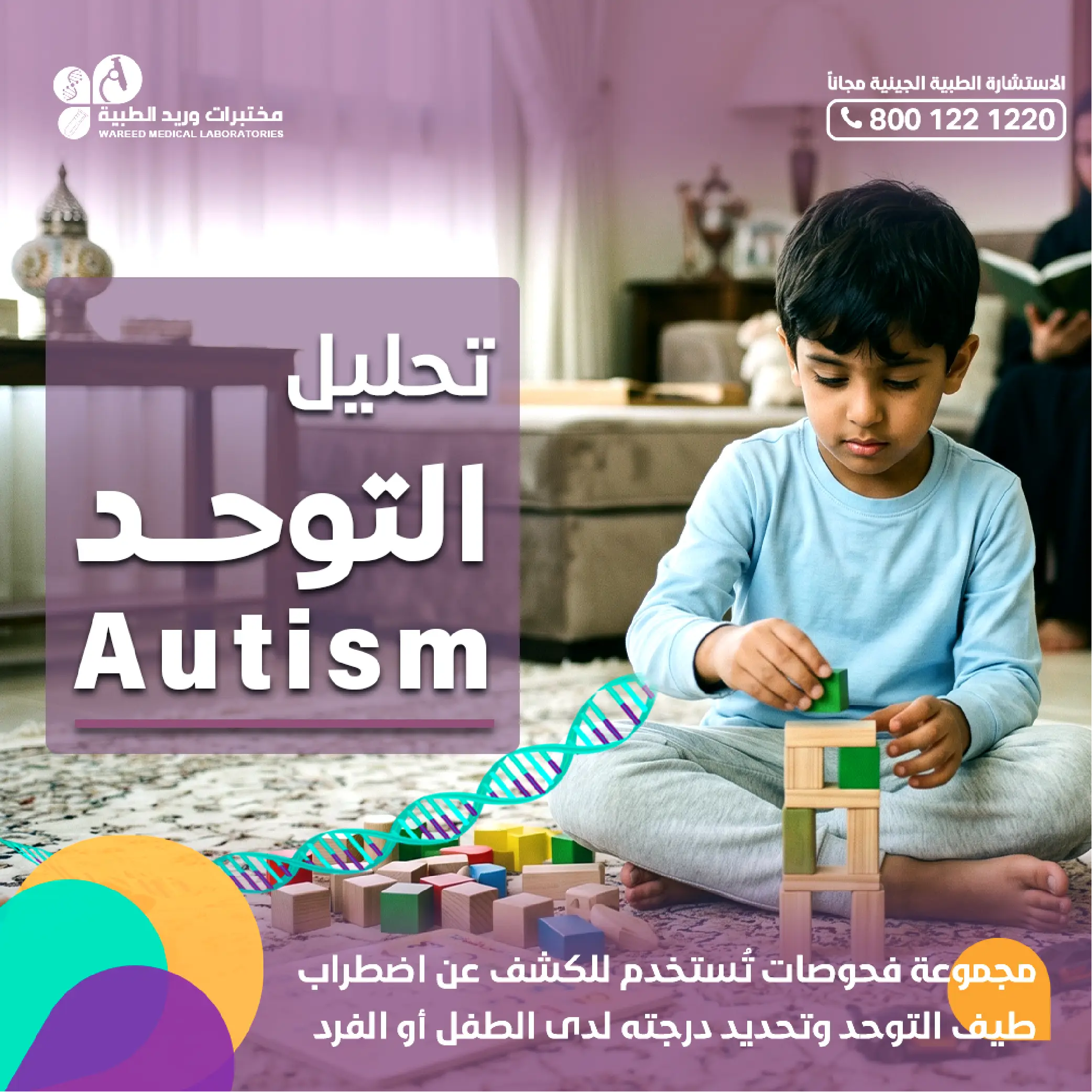
Test details:
What is an autism assessment?
An autism assessment is a comprehensive evaluation that aims to:
- Detect Autism Spectrum Disorder (ASD) at an early stage
- Understand how a person interacts with the world
- Assess communication, behavior, and cognitive development
Simply put:
It is a way to understand how the brain works differently in a person.
The purpose of the assessment
- Early detection of the condition before it progresses
- Assess social communication skills
- Determine the level of delay or difference in speech
- Understand repetitive behaviors
- Support appropriate treatment and rehabilitation decisions
- Help the family understand the condition better
Key characteristics assessed
Difficulty with social communication
- Difficulty understanding facial expressions
- Difficulty forming relationships or friendships
Delay or differences in speech
- Delayed speech in some children
- Using speech in a different way
Repetitive behaviors
- Repeating certain movements
- Repeating words or phrases
Limited or intense interests
- Intense focus on a specific topic or activity
Sensory sensitivity
- Increased or decreased sensitivity to:
Important information about autism
- It is called a “spectrum” because its severity varies from one person to another
- It is not contagious
- It is not caused by parenting
- Some individuals have distinctive abilities such as:
- Strong memory
- Special skills
When is the assessment recommended?
- When a delay in speech is noticed
- When there is difficulty communicating
- When repetitive behaviors appear
- Signs usually appear before the age of 3
Is there a treatment?
There is no treatment that completely eliminates the condition, but it can be improved through:
- Early intervention
- Behavioral therapy
- Family and educational support
These factors greatly help develop a person’s skills and live better.
Results and recommendations
After the assessment, the following is done:
- Assess the condition accurately
- Determine the level on the spectrum
- Develop an appropriate support plan
- Provide guidance for the family
- Monitor the condition’s progress
Conclusion
An autism assessment helps with early detection of Autism Spectrum Disorder (ASD) and provides a clear understanding of its characteristics, enabling timely intervention. With the right support, individuals with ASD can develop their skills and adapt to life effectively.