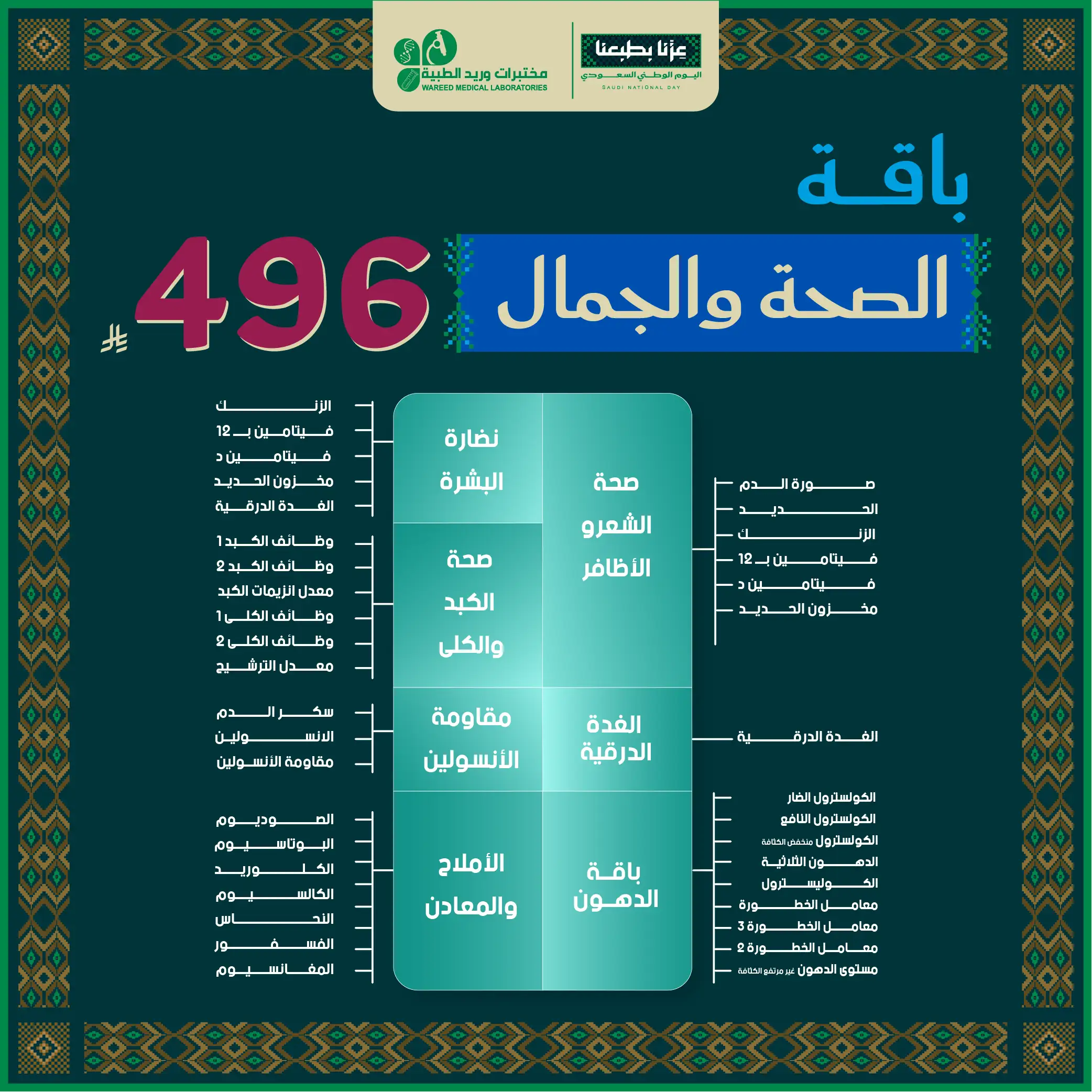
Details of the tests included in the Health and Beauty Package:
– Vitamin D:
This test measures
vitamin D levels in the blood, a vitamin essential for bone health, muscle function, immune system strength, and skin health.
– Vitamin B12:
Measures the amount of vitamin B12 in the blood, which is essential for DNA formation, nerve cells, red blood cells, and cognitive functions.
– Zinc:
Zinc plays a fundamental role in bone formation and health, and it also protects the immune system and the health of hair and nails.
– Iron:
Measures iron levels in the blood, which is very important for hemoglobin formation, the protein that allows red blood cells to transport oxygen. The test is important for diagnosing conditions such as anemia.
– Calcium:
Reveals calcium levels, which are a vital indicator of overall health, especially bone and dental health, nerve functions, and muscle contraction.
– Iron Stores:
The amount of iron stored in the body, found primarily in the liver and muscles in the form of ferritin and hemosiderin.
– Phosphorus:
Measures the level of phosphorus in the blood. Phosphorus is an essential mineral for building bones and teeth and also plays a role in how the body uses carbohydrates and fats. It is also necessary for protein synthesis for growth, repair, and maintenance of tissues and cells.
– Magnesium:
Measures the level of magnesium in the blood, an important mineral for muscle and nerve functions, and regulation of heart rate.
– Copper:
Measures the amount of copper in the blood. Copper is a mineral that contributes to several vital functions including metabolism, iron utilization, and nervous tissue development.
– Thyroid:
Thyroid hormone test measures the levels of hormones secreted by the thyroid gland, such as thyroxine (T4) and T3, to monitor thyroid function and diagnose disorders such as hyperthyroidism or hypothyroidism.
– Liver Enzymes:
A comprehensive test that measures various enzymes including alkaline phosphatase (ALP) and gamma-glutamyl transferase (GGT), used to assess liver function.
– Blood Sugar:
A test that measures glucose (sugar) levels in the blood, essential for assessing and monitoring conditions such as diabetes.
– Insulin Resistance:
A condition in which the body’s cells become less responsive to the hormone insulin, leading to elevated blood sugar levels and increased insulin secretion to compensate.
– Sodium, Potassium, Chloride:
Tests that measure the levels of these minerals in the blood, necessary for maintaining electrical balance and fluid balance in the body.
– Complete Blood Count:
A complete blood count is a blood test that provides information about blood cells in the body. This test includes the number and types of red blood cells, white blood cells, and platelets. It is used to detect health problems such as anemia or infection and gives a general idea of a person’s health status.
– Triglycerides:
Triglyceride test is a blood test that measures the level of triglycerides in the blood. Triglycerides are a type of fat (lipid) that the body uses as an energy source, and they are the main form in which fat is stored in the body.
– HDL Cholesterol:
Measures levels of good cholesterol in the blood, which is important for removing bad cholesterol from the body and helps protect blood vessels against hardening.
– LDL Cholesterol:
This test measures low-density lipoprotein (LDL), the bad type of cholesterol because it leads to cholesterol accumulation in artery walls, causing hardening and heart disease.
– Risk Factor 3 (Triglyceride):
Assesses blood fat levels and their role in cardiac risk.
– Risk Factor 2 (LDL):
Monitors the level of “bad cholesterol” and its effect on blood vessels.
– Risk Factor (Cholesterol):
Measures total cholesterol in the blood.
– Lipid Levels:
To examine cholesterol in its various types and assess triglyceride levels.
– VLDL Cholesterol:
This test measures the level of fats that carry very low-density cholesterol in the blood.
– Cholesterol:
A test that measures cholesterol levels in the blood; includes both bad (LDL) and good (HDL) types.
– Liver Function 1:
A test aimed at assessing liver health by measuring its enzyme levels and the efficiency of its performance.
– Liver Function 2:
A test that helps detect liver integrity and diagnose any inflammation or disorders that may affect its functions.
– Kidney Function 1:
A test that evaluates the kidneys’ ability to filter waste and regulate fluid and mineral balance in the body.
– Kidney Function 2:
A test used to assess kidney function and monitor any indicators that may suggest dysfunction or decline in performance.
– Glomerular Filtration Rate (GFR):
A test that estimates the kidneys’ efficiency in filtering blood, and is an important indicator of overall kidney health.
– Insulin:
Measures the level of insulin hormone in the blood to determine the body’s ability to regulate sugar.