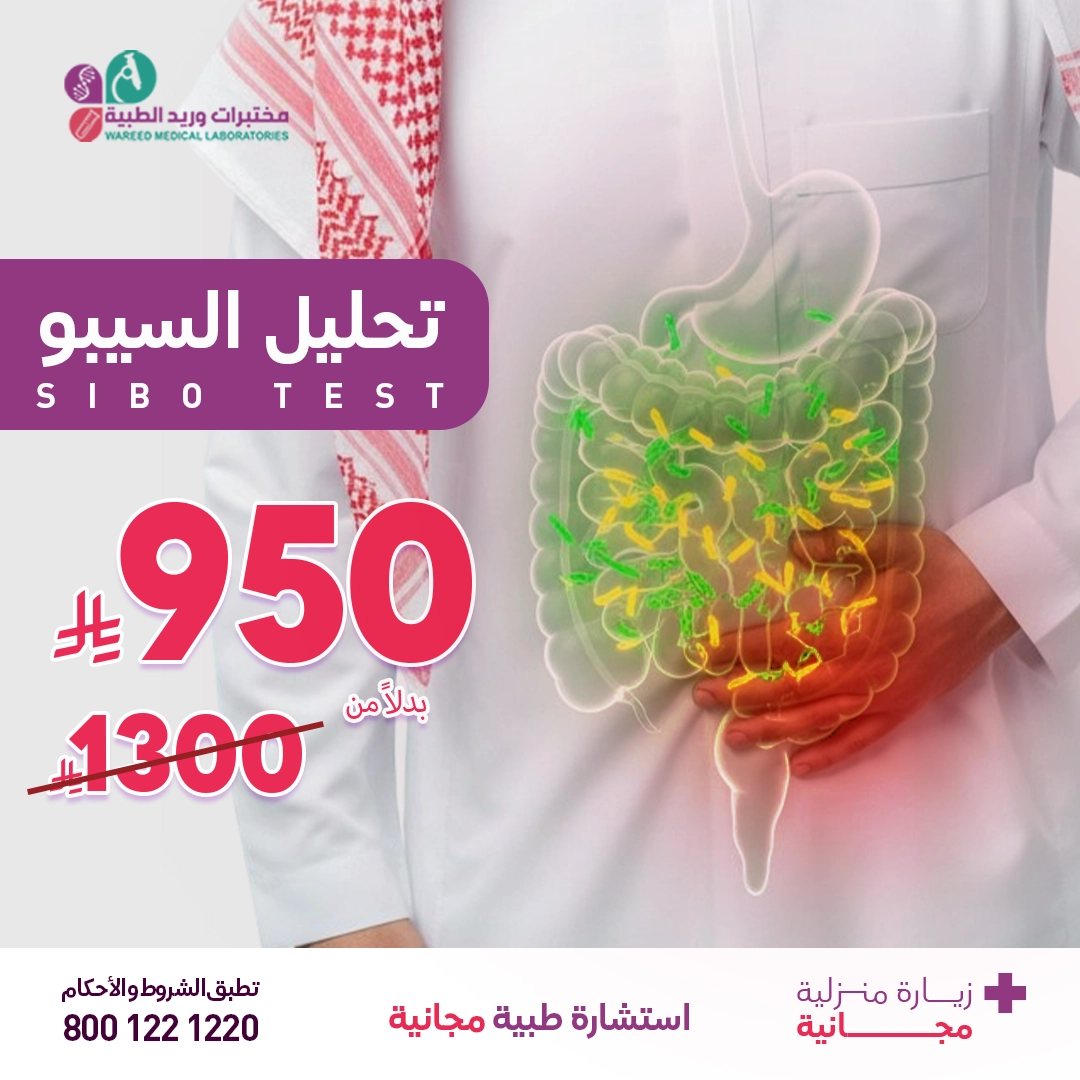
تفاصيل تحليل السيبو
يعتمد تحليل السيبو (Small Intestinal Bacterial Overgrowth) غالبًا على اختبار التنفس، حيث يقوم المريض بتناول محلول سكري مخصص، ثم يتم قياس مستويات الهيدروجين والميثان في هواء الزفير على فترات زمنية محددة.
ارتفاع هذه الغازات يدل على وجود نمو بكتيري غير طبيعي في الأمعاء الدقيقة.
ما الذي يكشفه التحليل؟
- تشخيص فرط نمو البكتيريا في الأمعاء الدقيقة
- تحديد نوع الغازات (هيدروجين أو ميثان)
- المساعدة في تفسير أسباب الانتفاخ واضطرابات الهضم
إرشادات وتعليمات قبل إجراء تحليل السيبو
لضمان دقة النتائج، يُرجى الالتزام بالتعليمات التالية:
التحضير لاختبار التنفس:
قبل الاختبار بأسبوعين:
- تجنّب المضادات الحيوية
- عدم استخدام ملينات أو ألوان البراز
- تجنّب البروبيوتيك والبريبايوتيك
قبل الاختبار بـ 24 ساعة:
- تجنّب الحبوب، منتجات الألبان، الفواكه، الخضروات، المكسرات، البذور، البقوليات
- المسموح: الدجاج أو السمك، الأرز الأبيض، البيض، الماء
يوم الاختبار:
- صيام 12 ساعة قبل الفحص ” يسمح شرب الماء “
- عدم التدخين أو مضغ العلكة
- عدم ممارسة الرياضة
- تنظيف الأسنان قبل الفحص بساعتين ” غير كحولي “
خطوات إجراء الاختبار:
- أخذ عيّنة تنفس أساسية (Baseline)
- شرب محلول محدد حسب نوع الفحص
- جمع عينات تنفس متكرّرة في أوقات محددة
- الحصول على النتائج فورياً أو بعد تحليل العينات
الحالات التي يساعد في تشخيصها:
- سوء امتصاص الفواكه ومنتجاتها
- عدم تحمّل اللاكتوز (منتجات الألبان)
- فرط نمو البكتيريا في الأمعاء الدقيقة (SIBO)
- المساعدة في تشخيص متلازمة القولون العصبي (IBS)
ما هو جهاز Gastrolyzer؟
جهاز حديث لتحليل التنفس يحدد سبب:
- الغازات
- الانتفاخ
- الغثيان
- آلام البطن
مميزات الاختبار:
- سريع وسهل
- غير مؤلم وغير جراحي
- يعتمد على قياس غازات الهيدروجين والميثان الناتجة عن هضم الطعام
بعد ظهور النتائج:
يقوم الطبيب أو أخصائي التغذية بمراجعة مستويات الغازات وتحديد الخطة العلاجية المناسبة، والتي قد تشمل:
- تعديل النظام الغذائي
- تغييرات في نمط الحياة
- أدوية معينة
- أو مزيج من الخيارات السابقة