Wareed Standard Program for 375
Benefit from the Wareed Standard Program for a comprehensive check-up covering blood, urine, kidney and liver functions, lipids, gout, thyroid hormone, salts and vitamins, and anemia. The program includes a detailed report, medical consultation, home or office sample collection, and an approved medical prescription.
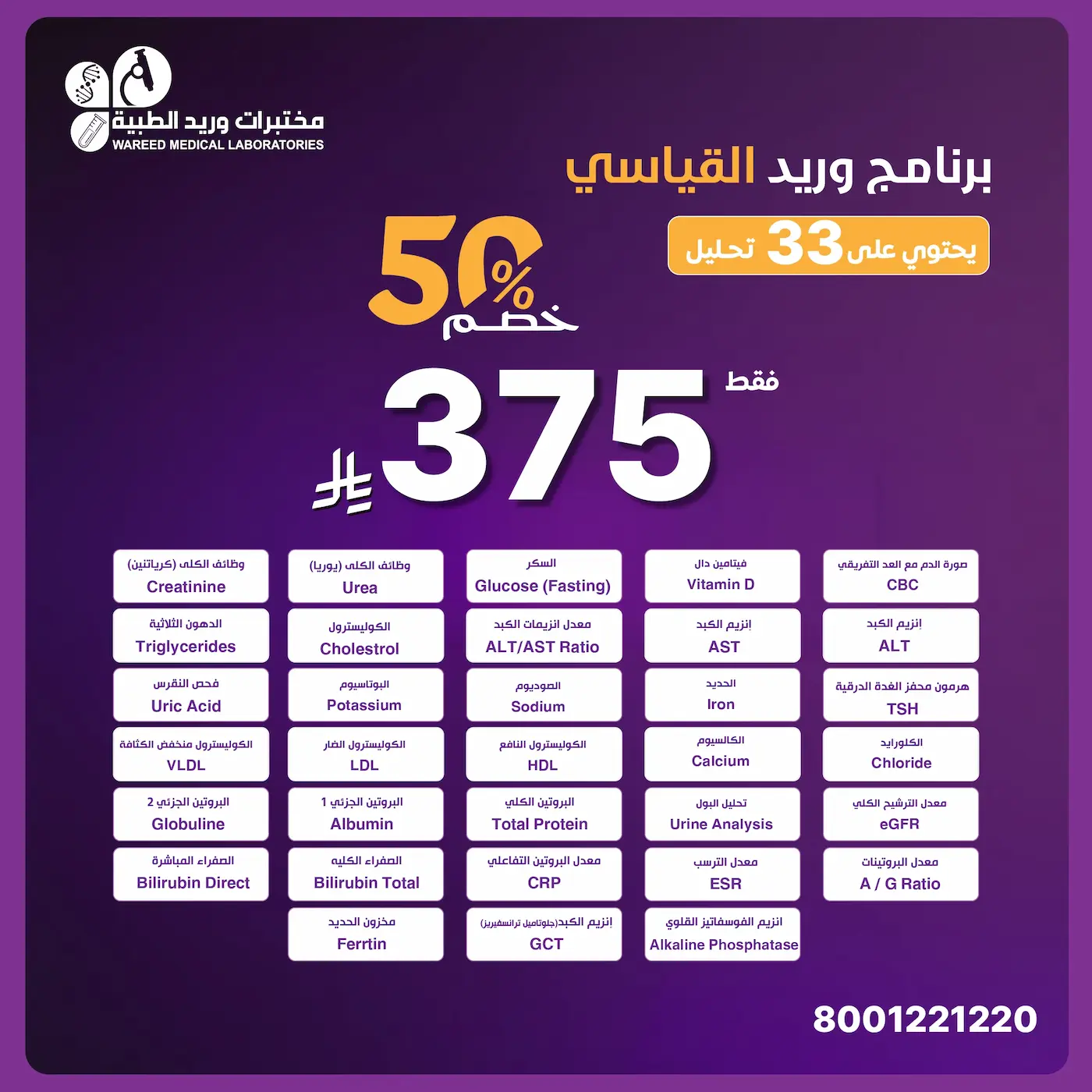
A complete blood count is a blood test that provides information about blood cells in the body. This test includes the number and types of red blood cells, white blood cells, and platelets. It is used to detect health problems such as anemia or infection and gives a general idea of a person’s health status
A test that measures glucose (sugar) levels in the blood, essential for assessing and monitoring conditions such as diabetes
Measures the level of urea in the blood, a waste product formed during protein metabolism. Elevated urea levels may indicate reduced kidney function, dehydration, or other conditions affecting the kidneys’ ability to remove waste efficiently.
Creatinine is a waste product generated by normal muscle metabolism. This test is one of the most important indicators of kidney function. Increased creatinine levels may suggest impaired kidney filtration and reduced kidney performance.
These tests are used to measure the levels of liver enzymes in the blood. This includes Alanine Aminotransferase (ALT) and Aspartate Aminotransferase (AST). Elevated levels of these enzymes can indicate liver cell damage, meaning there is a health problem with the liver.
A comprehensive test that measures various enzymes including alkaline phosphatase (ALP) and gamma-glutamyl transferase (GGT), used to assess liver function.
A test that measures cholesterol levels in the blood; includes both bad (LDL) and good (HDL) types.
A triglyceride test is a blood test that measures the level of triglycerides in the blood. Triglycerides are a type of fat that the body uses as an energy source, and they are the main form in which fat is stored in the body.
Measures the level of uric acid in the blood and helps evaluate conditions such as gout and disorders of purine metabolism.
Measures thyroid function by assessing the hormone responsible for regulating thyroid activity. Healthy thyroid function is essential for energy metabolism, endurance, and physical performance.
Package Benefits
Evaluates common hormonal causes of excessive hair growth.
Supports the assessment of androgen excess and hormonal imbalance.
Assists in the evaluation of conditions such as polycystic ovary syndrome (PCOS).
Helps investigate menstrual irregularities associated with hormonal disorders.
Provides valuable information to guide individualized medical management.
Suitable for women experiencing excessive facial or body hair growth or other symptoms of hormonal imbalance
Measures iron levels in the blood, which is very important for hemoglobin formation, the protein that allows red blood cells to transport oxygen. The test is important for diagnosing conditions such as anemia.
Reveals calcium levels, which are a vital indicator of overall health, especially bone and teeth health, nerve functions, and muscle contraction.
Measures levels of good cholesterol in the blood, which is important for removing bad cholesterol from the body and helps protect blood vessels against hardening
Provides an estimate of kidney filtration efficiency and is an important marker of overall kidney function.
A routine urine examination used to assess kidney health and screen for urinary tract infections, kidney disorders, and other systemic conditions.
This test measures the levels of Vitamin D in the blood, which is essential for bone health, muscle function, immune system strength, and skin health.
The sum of all proteins in plasma, reflecting nutritional status and liver and kidney health.
Refers to the albumin-to-globulin ratio in the blood, which helps assess the body’s protein status.
A test that measures the speed at which red blood cells settle in a blood sample to determine the presence of inflammation in the body.
A test that measures the level of C-reactive protein in the blood as a marker for acute or chronic inflammation.
A test used to measure the level of bilirubin in the blood.
Measures the level of bilirubin directly conjugated with globulin in the blood. Direct bilirubin is part of the total bilirubin produced by liver cells.
A laboratory test that measures the activity level of alkaline phosphatase enzyme in the blood, which helps diagnose conditions such as liver diseases, bone diseases, or alcohol poisoning.
The amount of iron stored in the body, found primarily in the liver and muscles in the form of ferritin and hemosiderin.
The breakdown product of creatine in muscles, used to assess kidney function.
An enzyme found in the heart, used to detect heart muscle damage, such as after a heart attack.
Measures the total capacity of serum proteins to bind iron. This test relies on the amount of transferrin protein, which is the primary protein in the blood that transports iron through the bloodstream to various parts of the body.
The iron carrier test measures the amount of iron not bound to transport proteins in the blood, such as transferrin.
سيتم التواصل معك من قبل وريد لتاكيد الحجز
سيتم التبرع بجزء من قيمة الفاتورة عبر منصة إحسان قدامك العافية